
Konzepte 2026
Im Jahr 2026 stehen in vielen Projekten Modernisierung, Effizienz und saubere technische Integration noch stärker im Fokus als zuvor. Gerade bei Fassaden- und Fenstersanierungen zeigt sich, dass begrenzte Einbauräume, Zugänglichkeit und Leitungsführung frühzeitig abgestimmt werden müssen. Eine präzise Vorplanung reduziert spätere Anpassungen auf der Baustelle und unterstützt einen reibungsloseren Projektablauf.

Warum die Fenstergeometrie die Auswahl des Antriebssystems bestimmt
Die Auswahl eines Fensterantriebs beginnt in der Praxis nicht beim Produkt, sondern bei der konkreten Einbausituation. Entscheidend sind die tatsächlichen Platzverhältnisse am Rahmen und am Flügel, die Öffnungsrichtung des Elements, die Zugänglichkeit für Montage und Wartung sowie die Frage, wie sich die Kabelführung technisch sauber integrieren lässt. Erst wenn diese Randbedingungen geklärt sind, lässt sich ein Antriebssystem belastbar und projektspezifisch auswählen.
Gerade bei natürlichen Lüftungslösungen, bei anspruchsvollen Fassadenfenstern oder in Sonderkonstruktionen zeigt sich, wie eng Mechanik, Montageart und Gebäudeplanung miteinander verknüpft sind. Bereits kleine Abweichungen bei Profilbreite, Beschlagslage oder Befestigungsebene können beeinflussen, welche Konsolen eingesetzt werden, welcher Hub realisierbar ist und ob die spätere Montage wirtschaftlich und wartungsfreundlich bleibt. Für Planer, Metallbauer und Fachbetriebe ist die Einbausituation deshalb keine Nebenfrage, sondern die technische Grundlage der gesamten Antriebswahl.
Rahmengeometrie und Platzverhältnisse am Blendrahmen
Am Beginn jeder Projektierung steht der Blick auf den Blendrahmen. Profilbreite, Profiltiefe, Ansichtsbreite und die Lage angrenzender Bauteile bestimmen, wo ein Antrieb überhaupt montiert werden kann und welche Befestigungslösung technisch infrage kommt. In vielen Projekten ist der tatsächlich verfügbare Raum deutlich geringer, als es auf den ersten Blick scheint. Laibungen, Sonnenschutzsysteme, Fassadenanschlüsse oder innenliegende Ausbaugewerke reduzieren den nutzbaren Montagebereich häufig stärker als erwartet.
Ausschlaggebend sind dabei nicht nur die Außenmaße des Fensters, sondern die real nutzbare Zone für Antriebskörper, Konsolen und Befestigungspunkte. Dazu gehören die tatsächliche Montageebene, mögliche Überstände, die Geometrie der Profilkammern und die Frage, an welchen Stellen Kräfte sicher in das Element eingeleitet werden können. Werden diese Punkte nicht frühzeitig geprüft, drohen spätere Kollisionen, eine erschwerte Montage oder unnötig aufwendige Wartungsarbeiten.
Profiltiefe, Ansichtsbreite und Montageebene
Je nach Profilsystem unterscheiden sich die Möglichkeiten der Antriebsplatzierung deutlich. Schlanke Ansichtsbreiten in Fassadenkonstruktionen erfordern häufig besonders kompakte Bauformen, während tiefere Rahmenprofile mehr Spielraum für Zubehör und Kabelführung bieten können. Technisch relevant ist dabei nicht nur der sichtbare Bereich, sondern vor allem die Ebene, auf der die Befestigung erfolgt, und die Ausrichtung des Antriebs zur Bewegungsachse des Flügels.
Eine präzise geometrische Abstimmung ist unverzichtbar, weil der Antrieb seine Kraft nicht abstrakt, sondern in einer ganz konkreten Einbaulage in das Element einleitet. Schon geringe Maßabweichungen können darüber entscheiden, ob Konsolen spannungsfrei montiert werden können oder ob der Bewegungsweg mechanisch ungünstig verläuft.
Konsolen und Befestigungspunkte profilorientiert auswählen
Die Auswahl der Konsolen ist unmittelbar an die Rahmengeometrie gekoppelt. Aluminium-, Kunststoff- und Holzprofile stellen jeweils unterschiedliche Anforderungen an die Befestigung. Entscheidend ist, dass die Montagepunkte kraftschlüssig, dauerhaft belastbar und auf die konkrete Einbausituation abgestimmt sind. Gerade bei häufigen Öffnungszyklen oder erhöhten Lasten durch Wind ist eine statisch saubere Anbindung unverzichtbar.
Ebenso wichtig ist die Abstimmung zwischen Konsolengeometrie und angrenzenden Bauteilen. Ein technisch geeigneter Antrieb hilft wenig, wenn das notwendige Zubehör wegen Profilversätzen, Abdeckschalen oder Anschlussdetails nicht fachgerecht montierbar ist. Deshalb sollte die Konsolenwahl immer aus der realen Geometrie des Elements abgeleitet werden und nicht aus einer pauschalen Standardannahme.
Kollisionen mit Laibung, Sonnenschutz und Anschlussdetails vermeiden
In der Praxis entstehen viele Probleme nicht durch den Antrieb selbst, sondern durch sein Umfeld. Außenliegende Verschattung, enge Leibungen, Verkleidungen oder komplexe Fassadenanschlüsse können Bewegungsraum und Montagezugang erheblich einschränken. Kritisch wird es vor allem dann, wenn diese Randbedingungen erst spät in die Planung einbezogen werden.
Eine frühe Kollisionsprüfung reduziert das Risiko, dass ein System zwar rechnerisch passt, im realen Ausbauzustand aber nur mit Kompromissen montiert werden kann. Für eine belastbare Projektierung sollten deshalb nicht nur Fensterdaten, sondern auch angrenzende Gewerke und spätere Ausbausituationen konsequent mitgedacht werden.
Der Fensterflügel als limitierender Faktor für Hub und Kinematik
Neben dem Rahmen ist der Flügel die zweite zentrale Größe für die Antriebsauswahl. Seine Form, seine Abmessungen und die Lage der Beschläge definieren, wie sich der Bewegungsweg mechanisch umsetzen lässt. In vielen Anwendungen wird der maximal mögliche Hub nicht durch die theoretische Leistungsfähigkeit des Antriebs begrenzt, sondern durch die Geometrie des Flügels und die daraus resultierende Kinematik.
Für die Projektierung bedeutet das, dass der gewünschte Öffnungswinkel nicht isoliert betrachtet werden darf. Entscheidend ist, welche Ausfahrlänge in der konkreten Anlenkung tatsächlich erforderlich ist und ob dieser Hub innerhalb der vorhandenen Geometrie technisch sauber realisiert werden kann. Flügelhöhe, Flügelbreite, Anschlagart und der Abstand der Befestigungspunkte spielen dabei eine wesentliche Rolle.
Beschlagslage und mechanischer Bewegungsweg
Die Beschlagslage beeinflusst direkt, wie der Flügel geführt wird und welche mechanischen Grenzen für den Antrieb gelten. Je nach Elementtyp verändert sich dadurch der wirksame Hebelarm, über den die Öffnungsbewegung umgesetzt wird. Das hat unmittelbare Auswirkungen auf den notwendigen Hub, auf die auftretenden Kräfte und auf die Auslegung der Befestigungspunkte.
Wird der Bewegungsweg des Antriebs nicht passend zur Flügelgeometrie gewählt, kann es zu ungünstigen Lastspitzen, erhöhtem Verschleiß oder einer unruhigen Bewegungscharakteristik kommen. Deshalb ist die exakte Abstimmung von Antrieb, Hub und Beschlagssituation ein wesentlicher Bestandteil jeder technisch sauberen Auslegung.
Hubweg, Öffnungswinkel und Schonung des Elements
Der realisierbare Öffnungswinkel ergibt sich nicht automatisch aus einem langen Hub. Maßgeblich ist das geometrische Zusammenspiel zwischen Anlenkpunkt, Flügelgeometrie und Bewegungsrichtung. Ein größerer Hub kann sinnvoll sein, wenn er zur Kinematik des Fensters passt. Er kann aber auch zu einer mechanisch ungünstigen Situation führen, wenn Beschläge, Profile oder Befestigungspunkte unnötig belastet werden.
Technisch sinnvoll ist daher eine projektspezifische Auslegung, bei der der gewünschte Lüftungs- oder Funktionsweg erreicht wird, ohne das Element an seine mechanischen Grenzen zu bringen. Das verbessert nicht nur die Betriebssicherheit, sondern trägt auch zur langfristigen Werterhaltung von Fenster und Beschlag bei.
Hubbegrenzung und angepasste Wegsteuerung
In vielen Anwendungen ist es sinnvoll, den Bewegungsweg gezielt zu begrenzen oder an die tatsächliche Geometrie anzupassen. Das gilt vor allem dann, wenn begrenzte Platzverhältnisse, empfindliche Anschlussdetails oder besondere Beschlagsituationen vorliegen. Eine präzise Wegsteuerung hilft dabei, den Flügel reproduzierbar zu bewegen und mechanische Überlastungen zu vermeiden.
Ebenso relevant ist die Frage, wie das System auf Hindernisse oder unerwartete Lastsituationen reagiert. Eine saubere Abstimmung von Hubweg, Abschaltverhalten und Befestigungssituation erhöht die technische Robustheit des Gesamtsystems und verbessert die Nachvollziehbarkeit im laufenden Betrieb.
Öffnungsrichtung und Bewegungsweg technisch richtig abstimmen
Ob ein Fenster nach innen oder nach außen öffnet, ist nicht nur eine architektonische Entscheidung, sondern eine grundlegende technische Randbedingung für die Antriebsauswahl. Die Öffnungsrichtung bestimmt, wie der Bewegungsweg des Antriebs in den Flügel eingeleichtet wird, welche Montageart sinnvoll ist und wie sich Kräfte im Betrieb verteilen.
Gerade bei Projekten mit unterschiedlichen Fenstertypen innerhalb eines Gebäudes sollte diese Differenzierung früh vorgenommen werden. Ein Antrieb, der in einer Einbausituation technisch plausibel ist, kann bei geänderter Öffnungsrichtung eine andere Konsolierung, eine andere Anlenkung oder sogar einen anderen Antriebstyp erfordern.
Besonderheiten bei einwärts öffnenden Elementen
Bei einwärts öffnenden Fenstern ist häufig die innenliegende Einbausituation maßgeblich. Hier spielen Innenverkleidungen, angrenzende Ausbaugewerke und die Erreichbarkeit bei der Montage eine zentrale Rolle. Gleichzeitig muss der Bewegungsweg so abgestimmt sein, dass der Flügel sicher öffnet, ohne an angrenzende Bauteile oder Bedienkomponenten anzulaufen.
Nicht jeder technisch mögliche Öffnungsweg ist im Betrieb sinnvoll. Deshalb sollte auch hier die konkrete Geometrie des Elements und nicht eine pauschale Maximalannahme die Grundlage der Auslegung sein.
Besonderheiten bei auswärts öffnenden Elementen
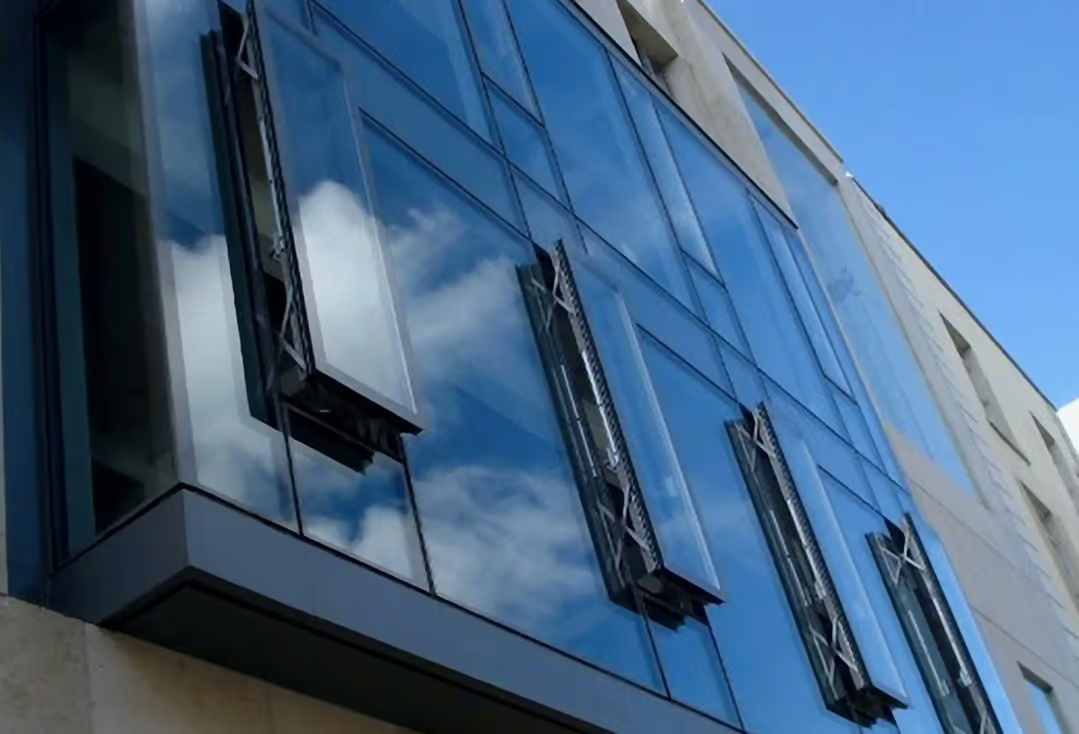
Bei auswärts öffnenden Fenstern verschiebt sich die technische Betrachtung stärker in Richtung Fassadenebene, Witterungseinfluss und äußere Anbausituationen. Die Montageart muss so gewählt werden, dass der Antrieb den Flügel in der vorgesehenen Richtung kontrolliert bewegt und zugleich die baulichen Randbedingungen berücksichtigt. In vielen Anwendungen ist dabei auch die Wechselwirkung mit Sonnenschutz, Fassadenraster und Außenanschlüssen besonders relevant.
Hinzu kommt, dass sich die Kraftübertragung je nach Anlenkgeometrie deutlich verändert. Für eine saubere Funktion müssen Hubweg, Antriebslage und Befestigungspunkte deshalb exakt zusammenpassen.
Kraftverlauf und Montageart in Einklang bringen
Die Öffnungsrichtung beeinflusst auch, wie der Antrieb im Betrieb Kräfte aufnimmt und abgibt. Für die Projektierung ist deshalb nicht nur die Nennkraft eines Antriebs relevant, sondern die Frage, wie diese Kraft in der konkreten Einbaulage wirksam wird. Daraus ergibt sich unmittelbar die Bedeutung einer technisch sauberen Montageart.
Rahmen- und Flügelmontage müssen so aufeinander abgestimmt werden, dass der Kraftverlauf stabil bleibt, der Flügel reproduzierbar bewegt wird und keine unnötigen Querkräfte entstehen. Gerade in zyklisch stark beanspruchten oder sicherheitsrelevanten Anwendungen ist diese Abstimmung ein wesentlicher Qualitätsfaktor.
Montagezugänglichkeit als Voraussetzung für Installation und Wartung
Ein Antriebssystem kann konstruktiv passend ausgelegt sein und dennoch in der Praxis Probleme verursachen, wenn die Zugänglichkeit nicht ausreichend berücksichtigt wurde. Für Fachbetriebe ist deshalb nicht nur die reine Einbaubarkeit entscheidend, sondern auch der verfügbare Arbeitsraum für Montage, elektrische Anbindung, Inbetriebnahme und spätere Wartung.
Besonders bei großformatigen Elementen, in Fassadenlagen oder bei komplexen Innenausbauten sollte früh geprüft werden, ob Werkzeuge, Befestigungsmittel und Anschlussleitungen im realen Einbauzustand überhaupt sinnvoll gehandhabt werden können. Eine theoretisch passende Lösung ist nur dann überzeugend, wenn sie auch unter Baustellenbedingungen sauber umsetzbar bleibt.
Arbeitsraum für Montage und Inbetriebnahme
Für eine effiziente Installation muss rund um das Fensterelement genügend Platz vorhanden sein, um Konsolen zu setzen, den Antrieb auszurichten und die elektrische Verbindung fachgerecht herzustellen. Werden diese Anforderungen zu knapp kalkuliert, steigt die Gefahr von Montagefehlern, Nacharbeiten oder improvisierten Lösungen.
Auch die Inbetriebnahme benötigt ausreichenden Zugang. Endlagenprüfung, Funktionskontrolle und gegebenenfalls Nachjustage setzen voraus, dass relevante Bauteile zugänglich bleiben und nicht durch angrenzende Konstruktionen blockiert werden.
Revisionsfähigkeit von Anfang an mitdenken
Im laufenden Betrieb zählt nicht nur, dass ein System funktioniert, sondern auch, dass es im Bedarfsfall erreichbar bleibt. Revisionsfähigkeit ist deshalb kein nachgelagerter Komfortaspekt, sondern Teil einer professionellen Systemplanung. Wer spätere Wartungsintervalle, Prüfungen oder den Austausch einzelner Komponenten berücksichtigt, verbessert die technische Nachhaltigkeit des gesamten Fenstersystems.
Das ist besonders relevant in Gebäuden mit anspruchsvoller Fassadentechnik oder hohem Nutzungsgrad. Dort reduziert eine vorausschauende Planung Stillstandszeiten, vermeidet unnötige Eingriffe in angrenzende Ausbaugewerke und unterstützt einen wirtschaftlicheren Betrieb über den gesamten Lebenszyklus.
Saubere Projektintegration beginnt mit der Kabelführung
Neben der Mechanik ist die Leitungsführung ein zentraler Bestandteil der Einbausituation. In vielen Projekten soll die Technik funktional zuverlässig und zugleich optisch zurückhaltend integriert werden. Das gelingt nur, wenn die Kabelführung nicht erst nach der Festlegung des Antriebs mitgedacht wird, sondern von Beginn an Teil der Planung ist.
Sichtbare Nachrüstlösungen, provisorische Leitungswege oder spätere Bohrungen sind häufig die Folge einer zu späten Abstimmung. Gerade bei hochwertigen Fassaden, schlanken Profilansichten oder projektspezifischen Sonderkonstruktionen ist eine dezente Integration jedoch ein wichtiges Qualitätsmerkmal.
Verdeckte Leitungsführung und Profilintegration
Ob und in welchem Umfang Leitungen verdeckt geführt werden können, hängt stark von der Profilkonstruktion ab. Profilkammern, Übergänge zwischen Rahmen und Flügel sowie Anschlusspunkte an das Gebäude müssen projektspezifisch betrachtet werden. In vielen Anwendungen ist eine verdeckte Führung möglich, wenn sie frühzeitig eingeplant und eng mit dem Fensterbau abgestimmt wird.
Wichtig ist dabei nicht nur der optische Aspekt. Auch Leitungsquerschnitte, Biegeradien, mechanischer Schutz und eine technisch saubere Verlegung sind zu berücksichtigen. Hinzu kommt die Abstimmung mit elektrotechnischen Anforderungen und der geplanten Steuerung.
Ästhetische Integration in Fassade und Elementgestaltung
Besonders in Pfosten-Riegel-Fassaden oder in architektonisch sensiblen Anwendungen spielt die visuelle Zurückhaltung der Technik eine wichtige Rolle. Eine kompakte Bauform, passend platzierte Konsolen und eine saubere Leitungsführung tragen dazu bei, dass der Antrieb seine Funktion erfüllt, ohne das Gesamtbild des Elements unnötig zu stören.
Je früher diese Aspekte in die Projektabstimmung einfließen, desto besser lassen sich mechanische Anforderungen, Wartbarkeit und architektonische Zielsetzung zusammenführen. Die ästhetische Integration ist damit kein Zusatz, sondern Teil einer durchdachten technischen Lösung.
Warum die frühe Abstimmung entscheidend ist
Die Einbausituation ist kein Detail, das erst kurz vor der Montage geprüft werden sollte. Sie entscheidet darüber, ob Antrieb, Zubehör, Fenstergeometrie und Projektumfeld technisch stimmig zusammenarbeiten. Rahmen, Flügel, Öffnungsrichtung, Zugänglichkeit und Kabelführung bilden eine funktionale Einheit. Werden diese Faktoren frühzeitig aufeinander abgestimmt, entsteht eine Lösung, die nicht nur montierbar, sondern auch langfristig belastbar und wartungsfreundlich ist.
Für Planer, Fachbetriebe und Projektverantwortliche liegt der praktische Nutzen auf der Hand: weniger Nacharbeit, geringere Kollisionsrisiken, klarere Schnittstellen zwischen den Gewerken und eine höhere Prozesssicherheit im Projekt. Genau deshalb sollte die Auswahl eines Fensterantriebs immer von der realen Einbausituation ausgehen und nicht von einer schematischen Standardannahme.
FAQ - Häufig gestellte Fragen
- Wie beeinflusst die Profilbreite die Auswahl der Montagekonsolen?
Die Profilbreite bestimmt, wie viel nutzbarer Raum für Antrieb, Konsole und Befestigung tatsächlich vorhanden ist. Dabei geht es nicht nur um das sichtbare Maß, sondern um die reale Montagezone inklusive Profilversätzen, Dichtungsbereichen und angrenzender Bauteile. Ist das Profil zu schmal oder geometrisch ungünstig aufgebaut, kann eine Standardkonsole ungeeignet sein oder nur mit Kompromissen montiert werden. Deshalb sollte die Konsolenwahl immer auf Basis der Profilzeichnung und der konkreten Einbausituation erfolgen.
- Was ist bei nach außen öffnenden Fenstern technisch besonders zu beachten?
Bei nach außen öffnenden Fenstern sind die Bewegungsrichtung des Flügels, die Lage der Befestigungspunkte und die Wechselwirkung mit der Fassadenebene besonders wichtig. Außenliegende Verschattung, Leibungsdetails oder Anschlussprofile können den Bewegungsraum beeinflussen. Gleichzeitig muss die Montageart so gewählt werden, dass der Kraftverlauf zum Element passt und der Flügel kontrolliert bewegt wird. Eine saubere Abstimmung von Hub, Anlenkung und Einbaulage ist hier entscheidend, weil pauschale Standardlösungen oft nicht belastbar sind.
- Warum muss der Hubweg exakt auf die Flügelgeometrie abgestimmt werden?
Der notwendige Hub ergibt sich aus der Geometrie des Flügels und der Lage der Anlenkpunkte, nicht allein aus dem Wunsch nach einem bestimmten Öffnungswinkel. Wird der Hub zu groß gewählt, können Beschläge, Profile oder Befestigungspunkte unnötig belastet werden. Ist er zu klein, wird die gewünschte Funktion möglicherweise nicht erreicht. Eine exakte Abstimmung verbessert daher nicht nur die Funktion des Fensters, sondern reduziert auch Verschleiß und erhöht die Betriebssicherheit des Gesamtsystems.
- Können Kabel bei jedem Fensterprofil verdeckt geführt werden?
Nicht jedes Fensterprofil bietet die gleichen Möglichkeiten für eine verdeckte Kabelführung. Ob Leitungen innerhalb der Profilkonstruktion geführt werden können, hängt von Kammergeometrie, Übergängen zwischen Rahmen und Flügel sowie von den vorhandenen Anschlussräumen ab. In vielen Anwendungen ist eine dezente Integration möglich, wenn sie frühzeitig geplant wird. Ohne rechtzeitige Abstimmung mit Fensterbau und Elektrogewerk entstehen dagegen häufig sichtbare oder nachträglich angepasste Leitungswege, die technisch und optisch weniger überzeugend sind.
- Wie viel Platz sollte am Blendrahmen für einen Fensterantrieb eingeplant werden?
Ein allgemeingültiges Mindestmaß lässt sich ohne Profilzeichnung und Montagesituation seriös nicht festlegen. Relevant sind die Bauform des Antriebs, die benötigten Konsolen, der Bewegungsraum sowie die Erreichbarkeit für Montage und Service. Zusätzlich müssen angrenzende Bauteile wie Laibungen, Verkleidungen oder Sonnenschutzsysteme berücksichtigt werden. Technisch sinnvoll ist daher immer eine projektbezogene Prüfung. Erst aus der konkreten Rahmengeometrie ergibt sich, welcher Platzbedarf für eine saubere und wartungsfreundliche Lösung tatsächlich erforderlich ist.
Fazit
Die Einbausituation ist bei Fensterantrieben kein nachgelagerter Prüfpunkt, sondern das zentrale technische Fundament der Auswahl. Rahmengeometrie, Flügelform, Öffnungsrichtung, Montagezugänglichkeit und Kabelführung greifen unmittelbar ineinander und bestimmen gemeinsam, welche Lösung im Projekt tragfähig ist. Wer diese Faktoren frühzeitig betrachtet, schafft die Voraussetzung für eine saubere Konsolenwahl, einen stimmigen Hubweg und eine kontrollierte Integration in das Fenstersystem.
Für Fachbetriebe, Planer und Projektleiter liegt der Mehrwert vor allem in höherer Prozesssicherheit. Früh geklärte Geometrien reduzieren Kollisionen, vermeiden spätere Anpassungen und verbessern die Abstimmung zwischen Fensterbau, Fassadenplanung und Elektrotechnik. Gleichzeitig steigt die Qualität der späteren Montage und Wartung. Genau deshalb lohnt es sich, die Einbausituation nicht nur als Detail der Projektierung zu sehen, sondern als wesentlichen Bestandteil einer belastbaren technischen Lösung.