
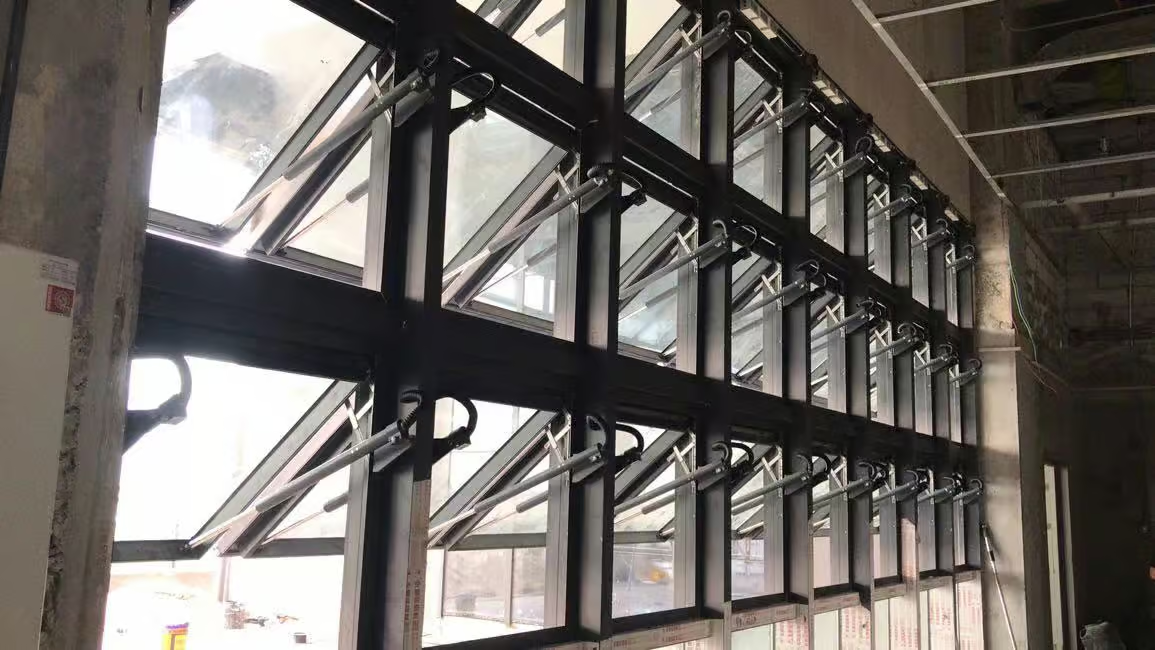
Konzepte 2026
Im laufenden Jahr rücken in vielen Projekten vor allem Modernisierung, Energieeffizienz und betriebssichere Lüftungskonzepte stärker in den Vordergrund. Gerade vor Wartungszyklen, Umbauten oder der Vorbereitung neuer Nutzungsphasen lohnt sich eine erneute Prüfung, an welchen Fensterelementen eine Automation technisch und organisatorisch sinnvoll ist.
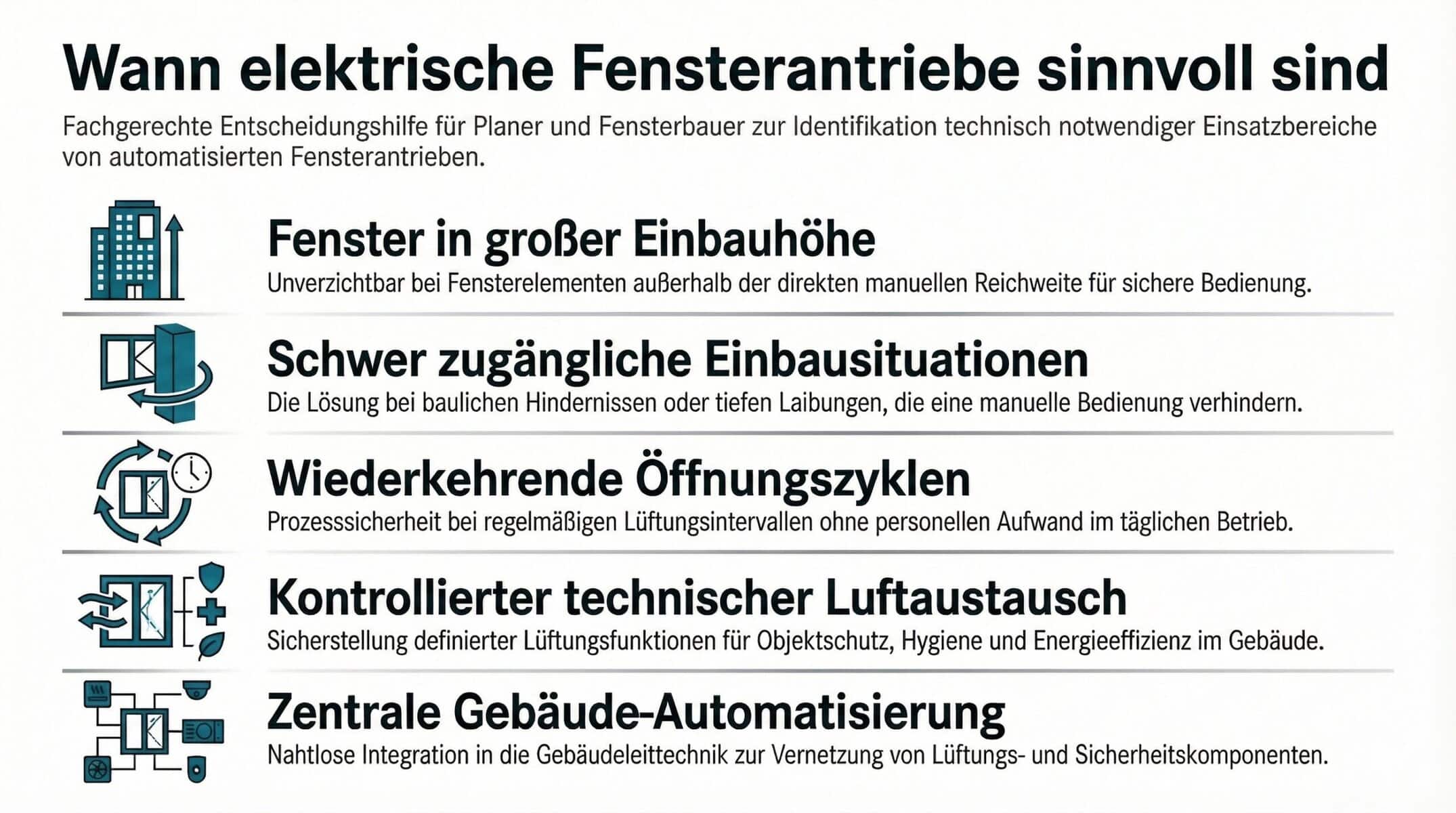
Wann elektrische Fensterantriebe im Projektbau technisch sinnvoll sind
Elektrische Fensterantriebe sind im gewerblichen und öffentlichen Bauwesen weit mehr als eine ergänzende Komfortfunktion. In vielen Projekten sind sie die technisch saubere Antwort auf Situationen, in denen eine manuelle Bedienung von Fenstern unpraktisch, organisatorisch aufwendig oder sicherheitstechnisch nicht ausreichend ist. Das betrifft unter anderem hoch liegende Fensterelemente, schwer zugängliche Einbauorte, regelmäßig erforderliche Lüftungsvorgänge und Anwendungen, in denen Fenster in übergeordnete Steuerungs- und Sicherheitskonzepte eingebunden werden müssen.
Für Fachplaner, Fensterbauer, Metallbauer und Projektverantwortliche stellt sich deshalb nicht nur die Frage, ob ein elektrischer Antrieb grundsätzlich möglich ist. Entscheidend ist vielmehr, wann er im konkreten Projekt technisch sinnvoll, funktional erforderlich oder wirtschaftlich nachvollziehbar ist. Genau hier hilft eine strukturierte Betrachtung der typischen Einsatzbereiche.
Fenster in großer Einbauhöhe
Fensterelemente in großer Einbauhöhe gehören zu den klassischen Anwendungsfällen für elektrische Fensterantriebe. Sobald Oberlichter, Bandfenster oder hoch liegende Fassadenelemente außerhalb der direkten manuellen Reichweite liegen, wird eine sichere und praxistaugliche Bedienung ohne Automation zunehmend schwierig.
Gerade in Hallen, Aulen, Foyers, Treppenhäusern, Verwaltungsgebäuden oder Sportstätten befinden sich Fensterflächen häufig in Höhenlagen, die eine manuelle Bedienung im Alltag ausschließen. Provisorische Lösungen wie Bedienungsstangen, Leitern oder mobile Zugangshilfen sind im laufenden Betrieb keine verlässliche Grundlage. Sie erhöhen den organisatorischen Aufwand, schaffen Unfallrisiken und führen in der Praxis oft dazu, dass Lüftungsfunktionen nur unregelmäßig oder gar nicht genutzt werden.
Sichere Bedienbarkeit im laufenden Betrieb
Aus planerischer Sicht ist nicht nur die Einbauhöhe selbst relevant, sondern auch die Frage, wer das Fenster wann und unter welchen Bedingungen bedienen soll. In vielen Anwendungen muss eine Lüftungsfunktion ohne Hilfsmittel, ohne besondere Unterweisung und ohne Gefährdung des Personals verfügbar sein. Elektrische Fensterantriebe schaffen hier eine klare betriebliche Entlastung, weil sie die Bedienung an eine zentrale Stelle verlagern oder zeit- und sensorabhängig automatisieren können.
Für Betreiber und Facility Management ist das besonders wichtig, wenn Räume täglich genutzt werden und Lüftungsintervalle zuverlässig eingehalten werden müssen. Eine technische Lösung ist in diesem Zusammenhang nur dann sinnvoll, wenn sie nicht von improvisierten Abläufen abhängt. Genau darin liegt die Stärke automatisierter Antriebe: Sie machen hoch liegende Fenster dauerhaft planbar bedienbar.
Lüftungsbereitschaft in hohen Räumen sichern
Hohe Räume stellen nicht nur wegen der Reichweite besondere Anforderungen. Häufig geht es auch um thermische Entlastung, Luftaustausch während definierter Nutzungsphasen oder die kontrollierte Abfuhr warmer Luftschichten. Wenn sich die dafür relevanten Fensterelemente im oberen Gebäudebereich befinden, lässt sich diese Funktion manuell meist nicht wirtschaftlich zuverlässig sicherstellen.
Elektrische Fensterantriebe ermöglichen in solchen Fällen eine definierte Öffnungsbewegung, abgestimmt auf Gebäudenutzung, Tageszeit und klimatische Randbedingungen. Aus einem nur theoretisch nutzbaren Fenster wird damit ein tatsächlich wirksames Lüftungselement innerhalb eines abgestimmten Gesamtkonzepts.
Schwer zugängliche Einbausituationen
Nicht nur große Höhe, sondern auch die konkrete Einbausituation kann eine manuelle Fensterbedienung unpraktisch oder technisch unzureichend machen. In vielen Projekten liegen Fensterelemente hinter tiefen Laibungen, werden von Einbauten teilweise verdeckt oder befinden sich in Bereichen mit eingeschränkter Bewegungsfläche. Auch Möblierung, Maschinen, Installationen oder Sicherheitszonen können dazu führen, dass eine direkte Bedienung im Alltag kaum möglich ist.
Solche Situationen treten typischerweise in Produktionsumgebungen, Technikbereichen, Verwaltungsbauten, Werkstätten, Laboren oder Sanierungsprojekten auf. Dort ist die Frage der Erreichbarkeit keine planerische Nebensache, sondern ein echter Funktionsfaktor. Wenn Fenster zwar vorhanden sind, im praktischen Betrieb aber kaum geöffnet werden, verliert das gesamte Lüftungskonzept an Verlässlichkeit.
Elektrische Bedienung als technische Entkopplung
Elektrische Fensterantriebe entkoppeln die Bedienfunktion vom direkten Zugriff am Fenster. Das ist besonders dort relevant, wo bauliche Hindernisse eine mechanische Lösung erschweren oder gestalterische Vorgaben eine dezente Integration erfordern. Im Unterschied zu rein manuellen Lösungen lässt sich die Bedienung an einen günstigen Ort verlagern oder vollständig in eine automatische Steuerung überführen.
Für Fachbetriebe ist dabei entscheidend, Automation nicht als pauschalen Ersatz manueller Beschläge zu verstehen. Vielmehr handelt es sich um eine projektspezifische Antwort auf bauliche Restriktionen. Wo die Zugänglichkeit dauerhaft eingeschränkt ist, erhöht ein elektrischer Antrieb die funktionale Qualität des Fensters erheblich.
Ergonomie und Betriebssicherheit im professionellen Umfeld
In gewerblichen Anwendungen spielt auch die Ergonomie eine größere Rolle, als es auf den ersten Blick scheint. Wenn Mitarbeitende regelmäßig ungünstige Bewegungen ausführen, schwer erreichbare Bedienstellen nutzen oder zusätzliche Wege zu einzelnen Fenstern zurücklegen müssen, entsteht nicht nur Zeitaufwand. Auch die Wahrscheinlichkeit unvollständiger oder unterlassener Bedienvorgänge steigt.
Eine elektrische Lösung reduziert diese Reibungsverluste und sorgt dafür, dass Fensterfunktionen dort verfügbar sind, wo sie benötigt werden, ohne den laufenden Betrieb unnötig zu belasten. Das ist besonders bei häufig wiederkehrenden Abläufen ein relevanter Vorteil.
Wiederkehrende Öffnungszyklen
Ein besonders wichtiger Einsatzbereich elektrischer Fensterantriebe ergibt sich überall dort, wo Fenster nicht nur gelegentlich, sondern regelmäßig geöffnet und geschlossen werden müssen. Sobald Öffnungszyklen Bestandteil des Betriebs werden, verändert sich die technische Bewertung grundlegend. Dann geht es nicht mehr um eine einzelne Bedienhandlung, sondern um einen definierten Prozess, der über längere Zeiträume zuverlässig funktionieren muss.
Typische Beispiele sind tägliche Lüftungsintervalle in Bürogebäuden, Schulungsräumen, Verwaltungsbereichen, Sanitärzonen, Besprechungsräumen oder Funktionsgebäuden mit wiederkehrenden Nutzungsphasen. In solchen Anwendungen ist entscheidend, ob der Luftwechsel nur nach Anlass und Verfügbarkeit von Personal erfolgt oder als planbare, reproduzierbare Funktion organisiert wird.
Betriebseffizienz durch geringere Wege- und Bedienzeiten
Wo Fenstergruppen regelmäßig betätigt werden müssen, entstehen schnell erhebliche Wege- und Bedienzeiten. Das gilt insbesondere bei größeren Gebäuden, mehreren Nutzungseinheiten oder Fenstern an unterschiedlichen Standorten. Der eigentliche Öffnungsvorgang dauert oft nur kurz, die organisatorische Kette dahinter ist jedoch aufwendig: Zuständigkeit, Begehung, Kontrolle, Nachschließen und gegebenenfalls Dokumentation.
Elektrische Fensterantriebe reduzieren diesen Aufwand deutlich, weil Steuerungsvorgänge zentral, gruppenweise oder automatisiert erfolgen können. Die Investition ist deshalb nicht nur technisch, sondern auch im Hinblick auf Betriebseffizienz relevant. Gerade im Facility Management wird häufig unterschätzt, wie viele manuelle Einzelschritte sich durch eine saubere Automatisierung vermeiden lassen.
Weniger Bedienfehler, mehr Prozesssicherheit
Manuelle Abläufe sind störanfällig. Fenster bleiben versehentlich geschlossen, werden zu spät geöffnet oder nach Dienstschluss nicht mehr kontrolliert. In manchen Objekten werden Lüftungsaufgaben personell mitgetragen, ohne dass dafür ein belastbarer Prozess hinterlegt ist.
Elektrische Fensterantriebe schaffen hier Prozesssicherheit. Öffnungs- und Schließvorgänge lassen sich definieren, zeitlich steuern und mit Sensorik verknüpfen. Dadurch wird die Lüftungsfunktion unabhängiger von Einzelpersonen. Besonders in Gebäuden mit wechselnden Verantwortlichkeiten, Schichtbetrieb oder hohem Organisationsgrad ist das ein zentraler Vorteil.
Kontrollierter technischer Luftaustausch
Ein weiterer zentraler Anwendungsbereich ist der kontrollierte technische Luftaustausch. Hier geht es nicht primär um Bedienkomfort, sondern um definierte Lüftungsfunktionen, die zur Raumhygiene, zum Feuchteschutz, zum Objektschutz oder zur thermischen Entlastung beitragen. Gerade in gewerblichen und öffentlichen Gebäuden genügt es häufig nicht, Fenster nur gelegentlich nach Bedarf zu öffnen. Stattdessen müssen Luftwechsel reproduzierbar und an die Gebäudenutzung angepasst erfolgen.
Elektrische Fensterantriebe sind in solchen Konzepten ein funktionaler Baustein. Sie ermöglichen präzise Öffnungsbewegungen, wiederkehrende Intervalle und die Kombination mit Sensorik sowie übergeordneten Steuerlogiken. Das ist besonders dann relevant, wenn das Nutzerverhalten keine ausreichende Grundlage für eine stabile Lüftungsfunktion darstellt.
Objektschutz durch intelligente Sensorik
Sobald Fenster automatisch betrieben werden, gewinnt die sensorische Überwachung an Bedeutung. Wind- und Regensensoren, Temperaturerfassung oder zeitliche Steuerungen helfen dabei, Lüftung gezielt freizugeben und bei ungünstigen Randbedingungen automatisch zu begrenzen. Für den Objektschutz ist das ein wesentlicher Faktor. Denn kontrollierte Automation bedeutet nicht nur Öffnen, sondern ebenso ein verlässliches Schließen unter definierten Bedingungen.
Gerade bei Wetterwechseln, außerhalb der Betriebszeiten oder in Gebäuden mit empfindlicher Ausstattung schützt eine intelligente Steuerung die Gebäudehülle und reduziert das Risiko ungeplanter Offenstellungen. Damit wird Fensterautomation zu einem Bestandteil technischer Schutzkonzepte und nicht nur zu einer Bedienerleichterung.
Nachtauskühlung und bedarfsgerechte Lüftung
In vielen Anwendungen kann eine automatisierte Nachtauskühlung zur thermischen Entlastung des Gebäudes beitragen. Voraussetzung dafür ist jedoch, dass die betreffenden Fenster zum richtigen Zeitpunkt, in definierter Stellung und unter geeigneten Randbedingungen betrieben werden. Eine manuelle Umsetzung ist in größeren oder komplexeren Objekten nur eingeschränkt realistisch.
Elektrische Antriebe ermöglichen es, solche Szenarien reproduzierbar umzusetzen. Dabei kommt es nicht auf maximale Öffnung in jedem Fall an, sondern auf eine saubere technische Abstimmung von Hubweg, Gruppenlogik und Steuerung. Auch Spaltlüftungsszenarien lassen sich projektspezifisch parametrieren, um Luftqualität und thermisches Verhalten kontrolliert zu beeinflussen.
Zentrale Gebäudeautomation
Sobald Fenster nicht isoliert betrachtet werden, sondern Bestandteil eines übergeordneten technischen Konzepts sind, wird die Einbindung in die zentrale Gebäudeautomation besonders relevant. Elektrische Fensterantriebe lassen sich in vielen Projekten mit weiteren Gewerken vernetzen, etwa mit Heizung, Kühlung, Verschattung, Wetterstationen oder sicherheitstechnischen Funktionen. Dadurch entsteht ein abgestimmtes Systemverhalten, das mit manueller Bedienung nicht erreichbar wäre.
Für Planer und ausführende Fachbetriebe ist dabei entscheidend, dass Fenster nicht nur angesteuert, sondern auch als rückmeldungsfähige Komponenten eingebunden werden können. Der Status offen, geschlossen oder in definierter Position ist im professionellen Umfeld oft ebenso wichtig wie der eigentliche Fahrbefehl.
Vernetzung mit anderen Gebäudefunktionen
Die technische Qualität einer Fensterautomation zeigt sich häufig erst im Zusammenspiel mit anderen Systemen. Wird beispielsweise eine Verschattung berücksichtigt, eine Heiz- oder Kühlstrategie eingebunden oder eine definierte Lüftungslogik für einzelne Zonen hinterlegt, entsteht ein funktionaler Mehrwert, der deutlich über die Einzelkomponente hinausgeht.
Je nach Projekt spielen dabei unterschiedliche Schnittstellen und Bussysteme eine Rolle. KNX, BACnet, Modbus oder andere Integrationspfade sind kein Selbstzweck, sondern Mittel zur systematischen Einbindung in die Gebäudetechnik. Für die Planung bedeutet das, frühzeitig zu definieren, welche Signale, Rückmeldungen und Prioritäten im Betrieb tatsächlich benötigt werden.
Rückmeldung, Priorisierung und technische Abstimmung
In professionellen Anwendungen reicht ein bloßer Fahrbefehl oft nicht aus. Relevant sind zusätzlich Rückmeldungen zum Fensterstatus, Prioritäten bei parallelen Anforderungen und eine saubere technische Abstimmung zwischen Komfortlüftung, wetterabhängiger Steuerung und gegebenenfalls sicherheitstechnischen Funktionen. Je besser diese Zusammenhänge in der Planung berücksichtigt werden, desto robuster arbeitet das Gesamtsystem im Betrieb.
Bei größeren Fenstergruppen kommen weitere Aspekte hinzu, etwa Gleichlaufregelung, passende Lastreserven, geeignete Steuerspannung oder die Überwachung von Leitungen und Signalen. Hier zeigt sich, dass Fensterautomation nicht nur aus dem Antrieb selbst besteht, sondern aus einem abgestimmten System aus Mechanik, Steuerung und Einbindung.
Technische Planungsaspekte früh berücksichtigen
Ob ein elektrischer Fensterantrieb sinnvoll ist, entscheidet sich nicht allein am Einbauort. Auch technische Randbedingungen beeinflussen die Qualität der Lösung erheblich. Dazu gehören die Wahl zwischen 24 V DC und 230 V AC, die gewünschte Sicherheitslogik, Anforderungen aus RWA-Konzepten, die Gruppierung von Fenstern, die Verkabelung sowie die Frage, wie fein die Antriebe parametriert werden sollen.
24 V DC wird typischerweise dort eingesetzt, wo sicherheitstechnische Anforderungen, RWA-Nähe oder eine besonders kontrollierte Systemarchitektur im Vordergrund stehen. 230 V AC kann in anderen Anwendungen sinnvoll sein, etwa wenn klassische Komfort- oder Lüftungsfunktionen ohne entsprechende Sonderanforderungen abgebildet werden sollen. Welche Lösung im Projekt die richtige ist, hängt von der Aufgabenstellung, der Infrastruktur und der gewünschten Einbindung ab.
Ebenso relevant sind Hubweg, Geschwindigkeit, Lastannahmen und die Abstimmung bei mehreren Fenstern innerhalb einer Gruppe. Große oder schwere Elemente erfordern eine saubere Auslegung, damit Bewegungsabläufe, Endlagen und Gleichlauf stabil funktionieren. Für Fachbetriebe liegt genau hier ein wesentlicher Teil der Planungsqualität.
Nutzungsqualität und Produktivität im B2B-Umfeld
Auch wenn im professionellen Umfeld technische und organisatorische Kriterien im Vordergrund stehen, sollte der Einfluss auf die Nutzungsqualität nicht unterschätzt werden. Eine kontrollierte Lüftung verbessert die Verfügbarkeit definierter Raumzustände und trägt dazu bei, dass Räume verlässlich nutzbar bleiben. Dabei geht es nicht um Komfortversprechen im konsumorientierten Sinn, sondern um funktionale Stabilität im Arbeitsalltag.
Wo Luftaustausch bedarfsgerecht, zugluftarm und zeitlich passend erfolgt, entstehen bessere Rahmenbedingungen für konzentriertes Arbeiten, geordnete Abläufe und eine konsistente Gebäudenutzung. Elektrische Fensterantriebe leisten dazu einen Beitrag, wenn sie nicht isoliert, sondern als Teil eines abgestimmten Nutzungskonzepts geplant werden.
Wann elektrische Fensterantriebe besonders sinnvoll sind
In der Gesamtbetrachtung zeigen sich fünf besonders relevante Einsatzbereiche: große Einbauhöhen, schwer zugängliche Einbausituationen, wiederkehrende Öffnungszyklen, kontrollierter technischer Luftaustausch sowie die Einbindung in zentrale Gebäudeautomation. In all diesen Fällen geht es nicht um eine Zusatzfunktion, sondern um technische Verlässlichkeit.
Für Planer und Fachbetriebe ist deshalb entscheidend, den Einsatz von Fensterautomation nicht pauschal, sondern projektbezogen zu bewerten. Dort, wo physische Erreichbarkeit fehlt, Prozesse reproduzierbar ablaufen müssen oder Fenster in ein übergeordnetes Gebäudekonzept eingebunden werden, sind elektrische Antriebe häufig die sauberste Lösung. Sie erhöhen die Bedienbarkeit, verbessern die Prozesssicherheit und schaffen eine belastbare Grundlage für moderne Gebäudefunktionen im professionellen Umfeld.
FAQs - Häufig gestellte Fragen
- Ab welcher Einbauhöhe ist ein elektrischer Fensterantrieb sinnvoll?
Eine starre Höhenangabe greift in der Praxis meist zu kurz. Entscheidend ist nicht nur die absolute Einbauhöhe, sondern ob das Fensterelement im späteren Betrieb sicher, ohne Hilfsmittel und ohne zusätzlichen organisatorischen Aufwand erreichbar ist. Sobald Leitern, Stangen oder besondere Zugangsmaßnahmen erforderlich würden, ist ein elektrischer Antrieb häufig die technisch sauberere Lösung. Im Projektbau sollte deshalb immer die reale Bedienbarkeit im Nutzungsalltag bewertet werden.
- Wann rechnet sich Fensterautomation wirtschaftlich?
Die Wirtschaftlichkeit ergibt sich selten allein aus einem einzelnen Öffnungsvorgang. Relevant sind vor allem wiederkehrende Wegezeiten, die Anzahl der Fenster, zentrale Zuständigkeiten im Betrieb sowie der Aufwand für Kontrolle und Nachschließen. In Gebäuden mit regelmäßigen Lüftungsintervallen oder mehreren Fenstergruppen kann sich Automation organisatorisch schnell auszahlen. Hinzu kommen indirekte Effekte wie höhere Prozesssicherheit, geringerer Bedienfehleranteil und eine bessere Einbindung in bestehende Gebäudefunktionen.
- Können elektrische Fensterantriebe in vorhandene Gebäudeautomation eingebunden werden?
Ja, in vielen Projekten ist genau das ein wesentlicher Grund für ihren Einsatz. Je nach Systemarchitektur können Antriebe in bestehende oder neu geplante Steuerungslösungen eingebunden werden, etwa über KNX, BACnet, Modbus oder andere geeignete Schnittstellen. Wichtig ist eine frühzeitige technische Abstimmung, damit Signale, Prioritäten, Rückmeldungen und Sicherheitsfunktionen sauber zusammengeführt werden. Entscheidend ist nicht nur die Ansteuerung, sondern das abgestimmte Verhalten im Gesamtsystem.
- Welche Sicherheitsaspekte müssen bei automatisierten Fenstern berücksichtigt werden?
Bei automatisierten Fenstern ist immer die konkrete Nutzungssituation maßgeblich. Relevante Aspekte können unter anderem Klemmschutz, sichere Schließlogiken, Prioritäten bei Wetterereignissen, Leitungsüberwachung, Rückmeldungen und abgestimmte Betriebsarten sein. In öffentlich zugänglichen oder besonders sensiblen Bereichen ist die Risikobeurteilung entsprechend sorgfältig vorzunehmen. Automation sollte daher nie als Einzelkomponente betrachtet werden, sondern als Teil eines technisch abgestimmten Sicherheits- und Nutzungskonzepts.
- Was ist der Vorteil automatischer Lüftungsintervalle gegenüber manueller Bedienung?
Automatische Lüftungsintervalle schaffen Verlässlichkeit. Statt von Einzelpersonen, Tagesform oder zufälligen Abläufen abhängig zu sein, erfolgt der Luftaustausch nach definierten Regeln. Das ist besonders in größeren Gebäuden oder bei wiederkehrenden Nutzungsprofilen ein Vorteil. Fenster können zeitgesteuert, sensorbasiert oder in Abhängigkeit anderer Gebäudefunktionen betrieben werden. Dadurch steigt die Prozesssicherheit, und Lüftungsfunktionen bleiben auch dann stabil verfügbar, wenn der Betriebsalltag komplex ist.
- Fazit
Elektrische Fensterantriebe sind im Projektbau immer dann besonders sinnvoll, wenn Fensterelemente nicht zuverlässig manuell bedient werden können oder wenn aus einer einzelnen Öffnungshandlung eine definierte technische Funktion werden muss. Große Einbauhöhen, schwer zugängliche Fenstersituationen, regelmäßige Lüftungszyklen, Anforderungen an kontrollierten Luftaustausch und die Anbindung an zentrale Gebäudeautomation sind dabei die zentralen Entscheidungskriterien.
Für Fachplaner und ausführende Betriebe liegt der Mehrwert nicht in pauschalen Komfortargumenten, sondern in einer belastbaren technischen Lösung, die Bedienbarkeit, Prozesssicherheit und Systemintegration zusammenführt. Je früher diese Aspekte in der Planung berücksichtigt werden, desto sauberer lassen sich Antrieb, Steuerung, Sensorik und Fenstermechanik aufeinander abstimmen. Damit wird Fensterautomation zu einem nachvollziehbaren Baustein moderner Gebäudefunktionen und nicht zu einer nachträglichen Zusatzoption.